
Re-Inventing The Hotdog
Firm Wide Innovation Culture
2024
//
Innovation Management, Operation Design, Organizational models
Ranked first, ranked tenth - the cross-metric pattern
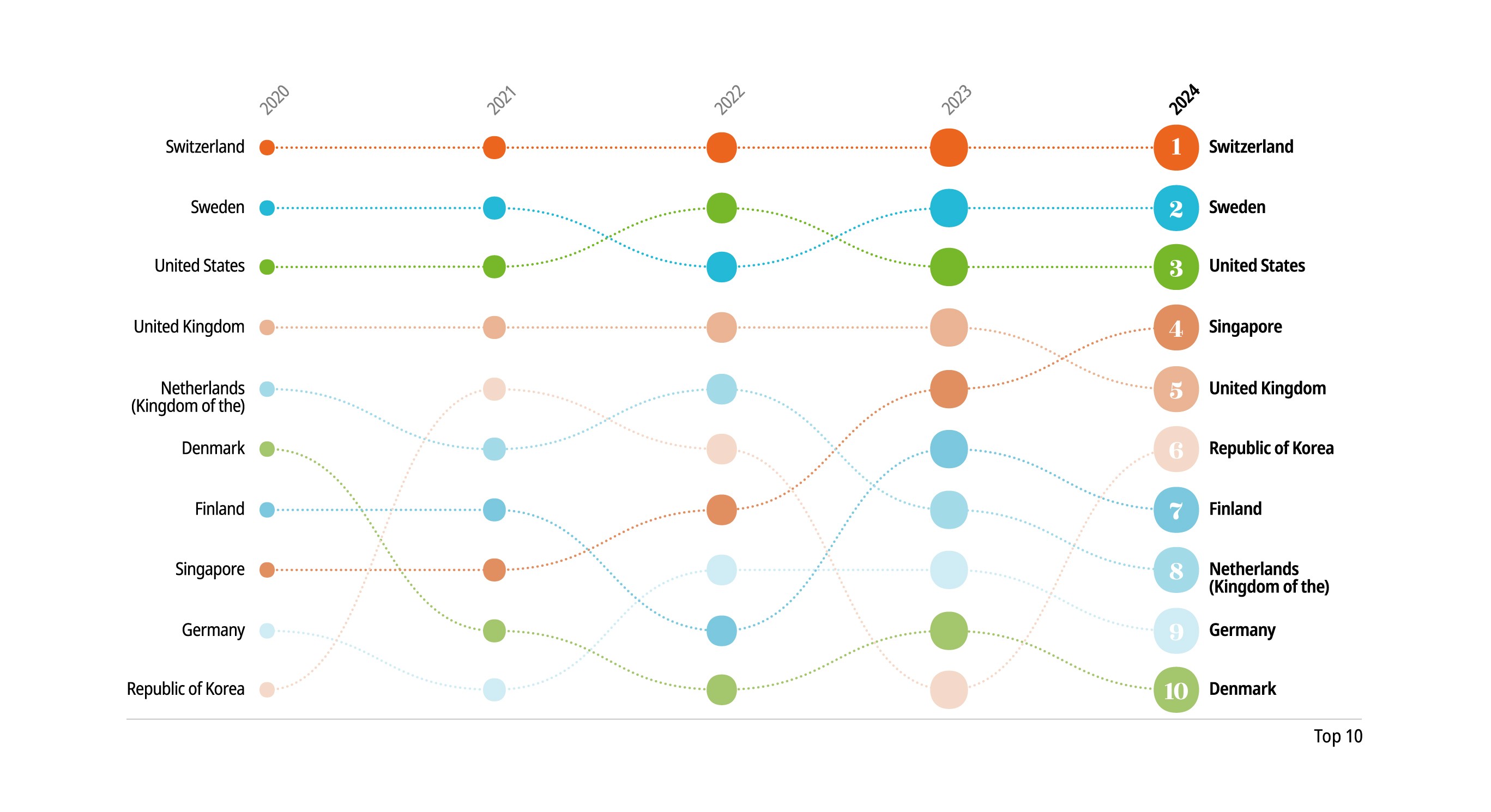
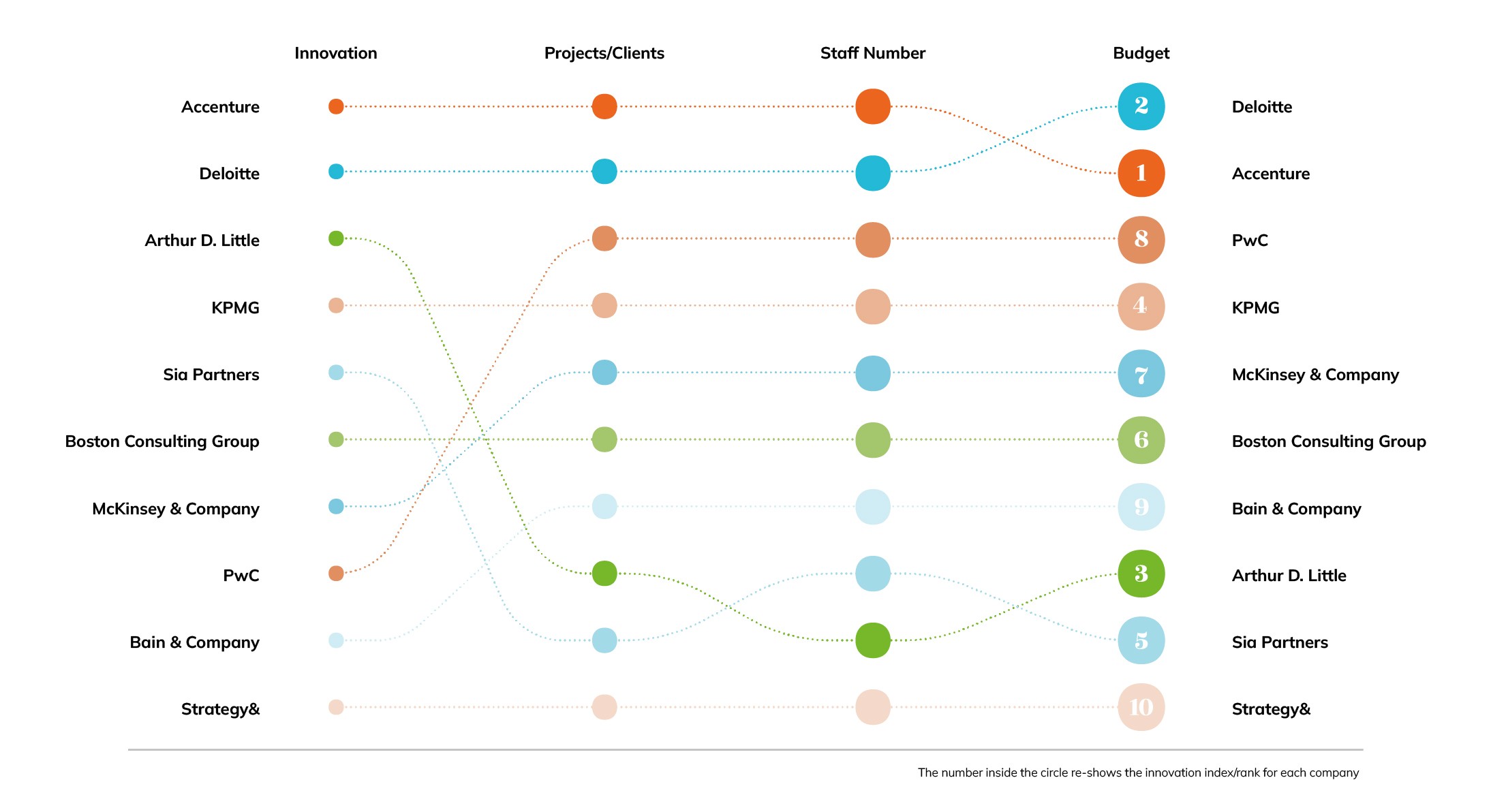
Looking at how innovation is measured at the country level (Switzerland, Sweden, the US holding the top of the global innovation index over the past five years) and how consulting firms rank against each other on innovation, projects/clients, staff numbers, and budget, a consistent pattern emerges: firms that lead on size, budget, and project volume do not necessarily lead on innovation, and the gap between those rankings has been widening.
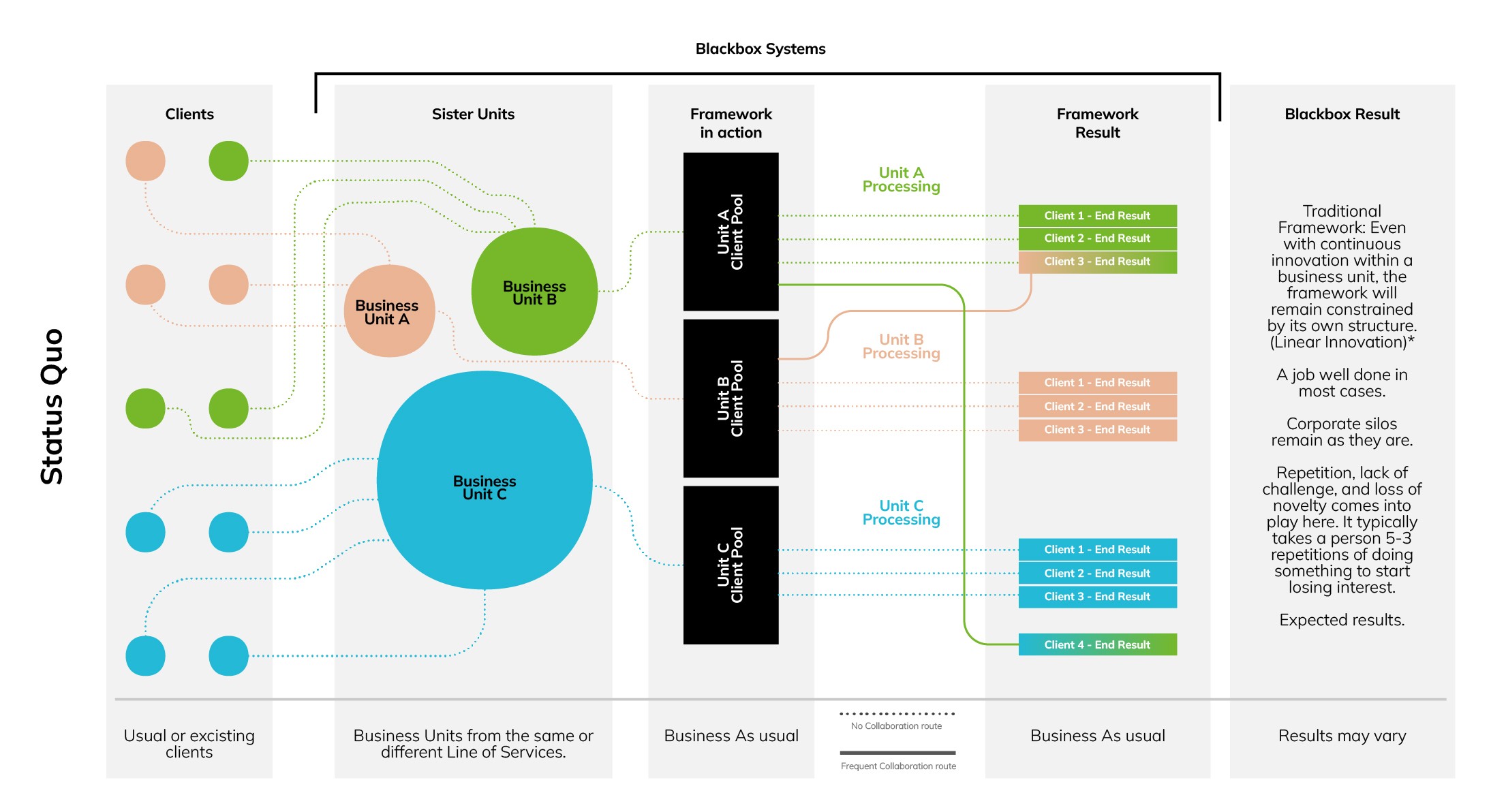
Inside the firms, the reason is visible in how work moves. Business Unit A pulls from its own client pool; Business Unit B pulls from its own client pool; Business Unit C pulls from its own client pool. Same teams, same frameworks, same methodologies, same delivery logic. The collaboration route between them is rare; the frequent route is straight through the unit. Over time this produces high operational output with declining novelty - a job well done in most cases, but with corporate silos remaining exactly as they are.
The issue is not capability scarcity. It is interaction scarcity. Even highly innovative individuals are constrained by reporting structures, utilization models, delivery incentives, and the organizational separation between units. The firm becomes technically advanced, but structurally linear.
Built for control, not for recombination
Consulting firms were historically built around specialization and risk containment. That model performs well under predictable conditions. It struggles when technology evolves rapidly, when client scopes overlap across domains, and when transformation programs demand simultaneous institutional, digital, operational, and behavioral redesign.
Three constraints follow. Organizational fragmentation: business units compete internally for ownership, which suppresses cross-functional experimentation. Static talent identification: hiring optimizes for credential and technical signal while undervaluing systems thinking, creative recombination, and adaptive problem-solving potential. Linear delivery architecture: projects move through pre-defined operational pathways, producing repeated solution patterns and limiting the discovery of unconventional but high-performing frameworks.
The paradox is straightforward - firms tasked with designing transformation externally struggle to structurally transform themselves internally.
Multidimensional innovation: same units, different routes
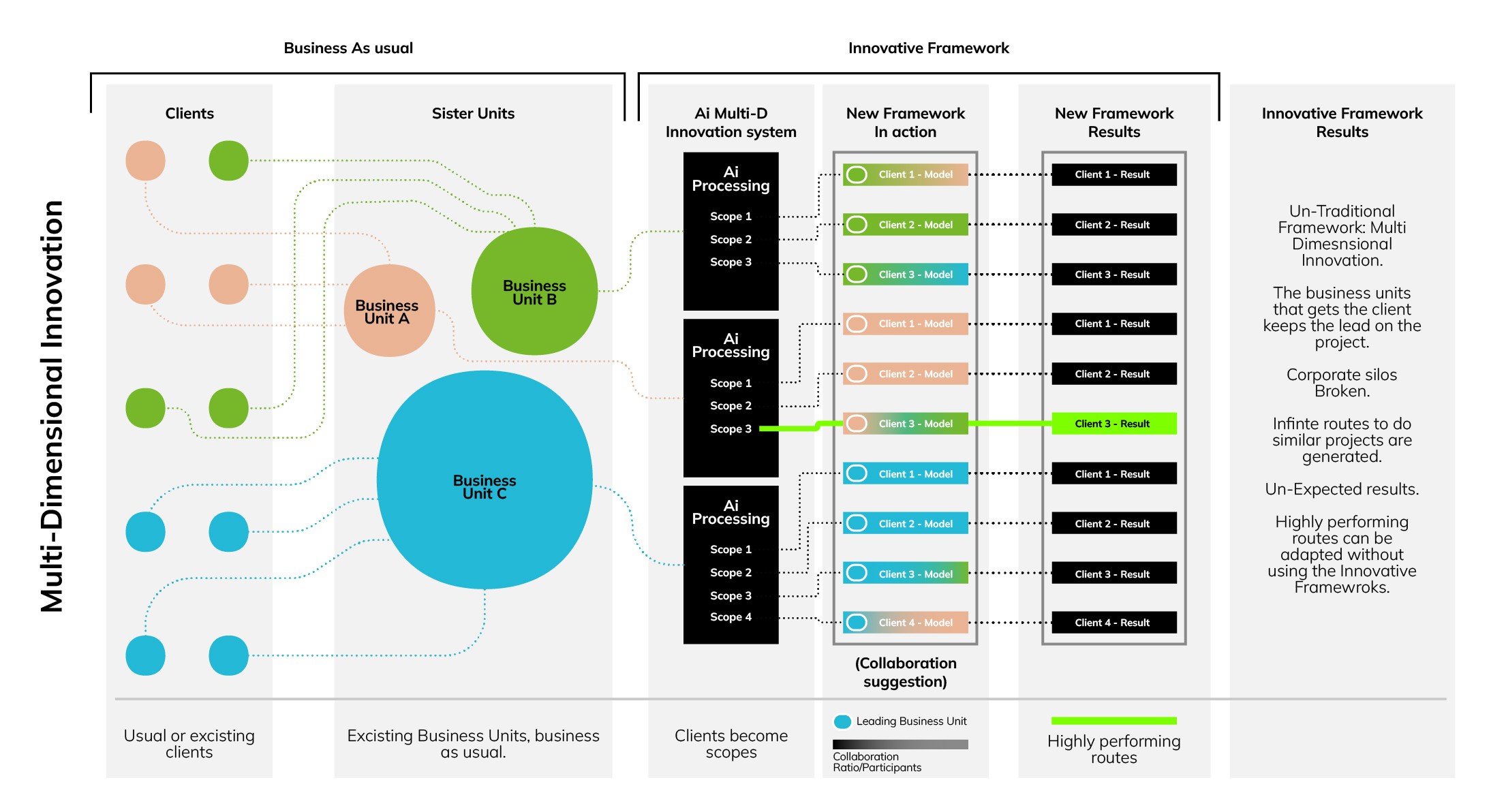
The intervention does not dismantle the silos. It changes how projects move between them.
At the core is an AI Project Alignment Engine: a routing system that reads active scopes across business units, identifies adjacent expertise and underutilized capability, and surfaces alternative operational configurations for project delivery. Where the status quo sends Client 1, 2, and 3 through Unit A's standard processing, the multidimensional model sees the same clients become scopes - and routes them across the firm to produce un-expected results. The leading business unit still keeps the client. The collaboration is structural, not optional. Highly performing routes that emerge get adapted into repeatable frameworks.
Two supporting layers make it work. An Innovation-Centered Talent Architecture redesigns recruitment and staffing to identify innovation potential, cross-functional reasoning, and collaborative adaptability alongside technical expertise - shifting hiring from credential optimization toward systems contribution potential. An Innovation Acceleration Center provides a dedicated internal environment where experimental delivery models and new collaboration structures can be prototyped outside the constraints of live engagements.
The output is not just more ideas. It is operational recombination at scale. The bun stays. What is inside it finally changes.
The broader implication is a shift in how large organizations structure intelligence internally. Instead of operating as siloed collections of specialized units, firms become adaptive systems capable of continuously recombining expertise, generating new operational models, and discovering emergent solution pathways as projects come in.
The practical advantages are faster innovation cycles, more integrated client solutions, higher internal knowledge mobility, stronger talent retention, and reduced dependence on any single organizational template. The conceptual shift is bigger: innovation stops being a department or a workshop and becomes an infrastructural property of the firm.
Re-inventing the hotdog was never really about the hotdog. It was about asking whether the structure inside the wrapper is still the right one.